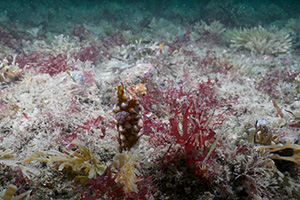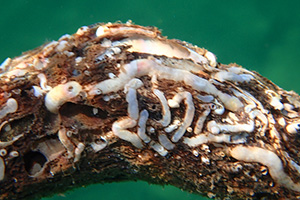
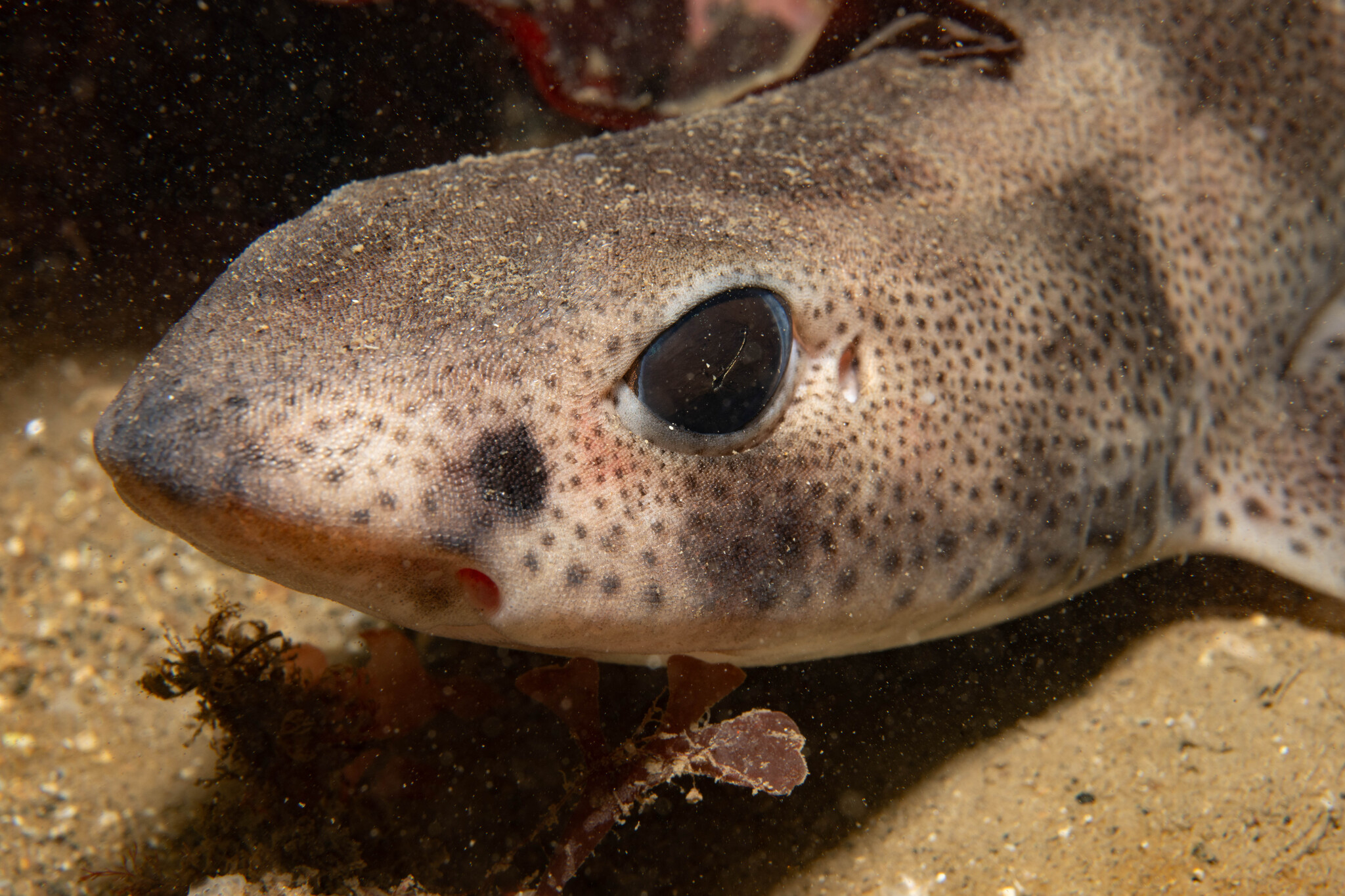
The Shark’s trust and BSAC have recently joined forces to provide answers to an oft-asked question. Where do sharks and skates lay their eggs? The new initiative from the shark trust, in coordination with the British Sub Aqua Club, extends the reach of the great eggcase hunt.

The Great Eggcase Hunt has been running for over two decades, since its launch in 2003, and over 600,000 eggcases have been recorded in that time. The hunt itself encourages people to head out to the beach or coastline and take a look out for mermaid’s purses. These are the eggcases of sharks and skates – many of which wash ashore after they have hatched. Anyone can contribute to the great eggcase hunt, no matter their age or interest, and it’s a great way to get out and spend time near the sea.

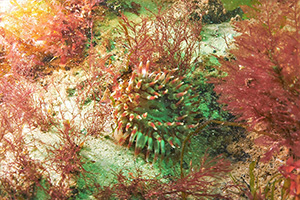
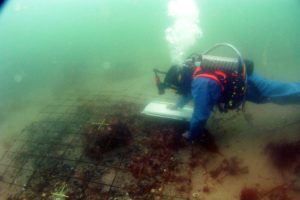
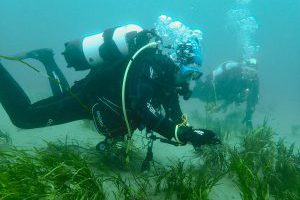
However, of the 600,000 eggcases recorded in the two decades of the Great Eggcase Hunt thus far, over 99% have been recorded on beaches, washed ashore once the shark or skate has already hatched. In partnering with BSAC, the shark trust hopes to gain more insight into the shark and skate life cycle by encouraging records from the subtidal, and of eggcases still attached to seaweed and the seabed. In some cases this will be eggcases that have the young shark or skate still developing within, but the main goal of this call is to observe the places and the habitats that sharks and skates use to allow their offspring to develop safely.

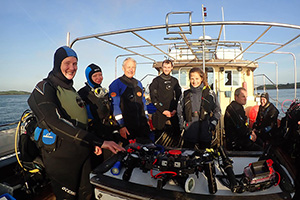
By reaching out to divers and snorkellers, the shark trust hope to fill a vital gap in the data collected as part of the Great Eggcase Hunt. This will allow them to continue and progress their fantastic work in protecting sharks and skates all over the world.

In addition, this year The Shark Trust are holding the Great Shark Snapshot! This event will be from the 18th to the 26th of July 2026, and during this week divers and snorkellers are requested to submit records of all their sightings of sharks, rays and skates to the Shark Trust, allowing them to build a picture of species distribution around the UK and indeed, around the world! So, get your goggles on and look out for any elasmobranchs you might see, especially this summer.

You can log your sightings of sharks and skates on the Shark Log Sightings database, especially during this Great Shark Snapshot week. But of course, sightings are welcomed and encouraged all year round.

Head to Shark Trust Great Eggcase Hunt to find resources and ID guides to help you find and identify mermaid’s purses! The shark trust also has an app for you to record your eggcase sightings, as well as their recording hub.
Hi and Welcome (or welcome back) to Dive NI’s blog. Sorry we have been absent for a while, but changes are afoot, with many updates happening over the last year or so and many yet to come. First of all, take note of our new URL – we are now operating from diveni.org.


We will be continuing to change things up a bit here in the next few months, and we hope you’ll join us as we venture forwards for the next steps of our journey. Keep an eye on this site as we will be updating more regularly, and feel free to pass the new address on to anyone who may be interested in seeing what’s coming!


Call for submissions!

If you have a dive site, dive club, or dive footage you’d like to see on our site, please let us know at _______________. We’d love to feature more images and videos from our followers!

Hello! Justin Judge here.

It is with great pleasure that I extend my greetings to you as the new DiveNI Coordinator, taking over from Sally Stewart-Moore. As Sally has moved over to other ventures, I have taken up the role as Marine Biodiversity Officer at the Centre for Environmental Data and Recording (CEDaR), National Museums NI.

My background is structured from several aspects of working in the marine realm. I have worked for several years as a marine consultant, specifically as a Marine Mammal Observer. I have also been involved in numerous conservation projects, e.g., elasmobranch population assessments and marine research, where I have recently completed my PhD in marine food web ecology. I am also a BSAC Sports Diver and Snorkel Instructor.

To refresh your memory or for those that are unaware of my role at CEDaR, I am responsible for collating marine data in Northern Ireland from a range of stakeholders, e.g., from governmental bodies to citizen scientists, supporting the collection, management and dissemination of marine data via a central hub. The formation of this database is helping to inform and steer policy- and decision-making.

As I am sure you are aware, Sally has achieved an incredible amount through the creation and maintenance of DiveNI. I am very excited to pick up where she left off. Definitely big shoes to fill!

I look forward to meeting you all at some point in the future, hopefully above and below the water!

In the meantime, if you have any questions, ideas or feedback, please email info@dive-ni.org


Justin Judge

DiveNI Coordinator

Marine Biodiversity Officer (CEDaR)

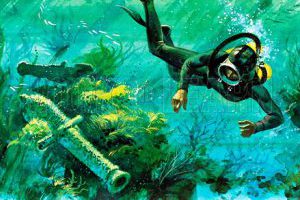
Undoubtedly, our most famous wreck is that of La Girona, a galleous of the Spanish Armada, which, overladen with people and treasures, hit the rocks off the Giant’s Causeway in 1588 and sank.

Of the 1300 people on board, only 9 are believed to have survived and the treasures remained on the seabed for some 400 years before finally being discovered by a team of divers from Belgium in the late 1960s led by Robert Stenuit.

In this video we hear from Greer Ramsey, Curator of History from Ulster Museum, as he talks us through the journey of La Girona and the artefacts that were recovered, alongside Dan Snow who visited the site for The One Show and History Hit back in 2017.

Stenuit kindly wrote to DiveNI this month and also included are his memories of the moment they found the site of La Girona and the salvage operation that ensued….

*Note that the designation order on this site (under The Protection of Wrecks Act, 1973) requires that any diver wishing to visit it must apply for a license.* For more info visit: https://www.communities-ni.gov.uk/shipwrecks

test

test